
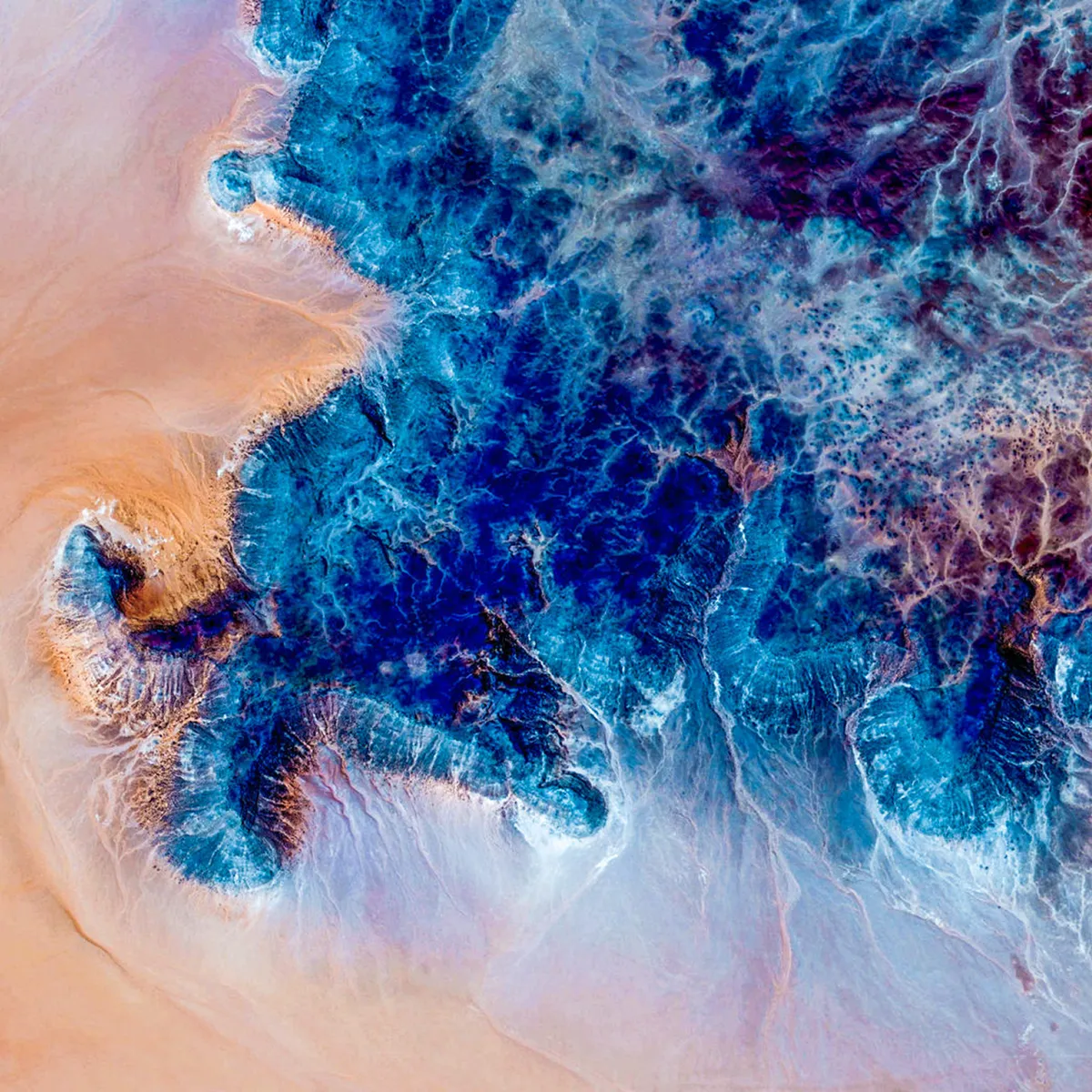
On October 23, 2025, Google introduced Google Earth AI, a groundbreaking platform that leverages Gemini’s reasoning capabilities to automatically connect disparate geospatial models—weather forecasts, population maps, and satellite imagery—enabling researchers, governments, and organizations to tackle the planet’s most critical challenges. The platform is already demonstrating real-world impact: WHO AFRO is using Earth AI to predict cholera outbreaks in the Democratic Republic of Congo, while climate researchers identify drought-vulnerable communities before disasters strike.
Geospatial Reasoning: Gemini Connects the Dots
The Core Innovation
Traditional geospatial analysis requires experts to manually integrate data from multiple sources—satellite imagery, weather models, demographic data, infrastructure maps—and interpret complex relationships. Geospatial Reasoning, powered by Gemini, automates this process through AI-driven analysis.
How It Works:
1. Multi-Model Integration:
- Gemini automatically identifies which Earth AI models are relevant for a query
- Connects weather forecasts, population density maps, and satellite imagery
- Synthesizes information across temporal and spatial dimensions
2. Natural Language Queries:
- Analysts ask questions in plain English
- Gemini translates queries into geospatial analysis workflows
- Results are presented with visual maps and data-driven insights
3. Complex Relationship Analysis:
- Identify cause-and-effect relationships across environmental factors
- Predict cascading impacts (e.g., drought → crop failure → migration)
- Prioritize vulnerable populations and critical infrastructure
Example: Storm Forecasting and Crisis Aid
Traditional Approach:
- Meteorologist analyzes storm path (hours of work)
- Demographer identifies affected populations (separate analysis)
- Infrastructure expert assesses critical facilities at risk (more separate work)
- Emergency manager synthesizes all information (coordination overhead)
With Geospatial Reasoning:
- Query: “Which communities and infrastructure are most at risk from the approaching tropical storm?”
- Gemini’s Analysis:
- Processes storm forecast models
- Overlays population density data
- Identifies hospitals, power stations, evacuation routes
- Assesses flood risk based on elevation and drainage
- Prioritizes vulnerable populations (elderly, medical needs)
- Result: Comprehensive risk assessment in minutes, not days
This automated synthesis enables faster, more informed emergency response decisions.
Enhanced Satellite Imagery Analysis
Object Detection and Pattern Discovery
Google Earth AI brings new capabilities to Gemini for analyzing satellite imagery, enabling users to instantly identify objects and discover patterns that would take human analysts months to find.
Use Cases:
1. Environmental Monitoring:
- Dried riverbeds: Identify where rivers have dried up to predict dust storm risks
- Harmful algae blooms: Quickly detect algae concentrations threatening drinking water
- Deforestation tracking: Monitor illegal logging and forest loss
- Glacier retreat: Measure ice melt and climate change impacts
2. Infrastructure Assessment:
- Building damage: Post-disaster damage assessment for insurance and relief
- Road networks: Map transportation connectivity in remote areas
- Agricultural changes: Track crop health and land use patterns
- Urban expansion: Monitor city growth and informal settlements
3. Disaster Response:
- Flood extent mapping: Determine inundation boundaries for rescue operations
- Wildfire perimeters: Track fire spread in real-time
- Landslide detection: Identify ground movement and potential failures
- Refugee camp monitoring: Assess shelter conditions and population dynamics
Real-World Example: Water Supply Protection
Scenario: A municipal water authority needs to protect drinking water quality.
Traditional Method:
- Human analysts review satellite images manually
- Process takes weeks to identify algae blooms
- By the time blooms are confirmed, contamination may have occurred
With Earth AI:
- Automated monitoring: Gemini scans reservoir imagery daily
- Early detection: Identifies algae bloom formation within hours
- Predictive alerts: Forecasts bloom spread based on weather and water temperature
- Intervention window: Water authority has days to implement preventive treatment
Result: Proactive protection instead of reactive crisis management.
Real-World Impact: WHO AFRO and Cholera Prediction
Predicting Disease Outbreaks
The World Health Organization’s Africa Regional Office (WHO AFRO) is using Earth AI’s Population and Environment models to understand and predict cholera outbreak risks in the Democratic Republic of Congo.
How Earth AI Helps:
1. Population Density Mapping:
- Identify crowded areas with limited sanitation infrastructure
- Map informal settlements without clean water access
- Track population movements and refugee flows
2. Environmental Risk Factors:
- Monitor water source contamination (rivers, lakes)
- Assess flooding that spreads waterborne diseases
- Track seasonal patterns correlated with outbreak history
3. Integrated Risk Assessment:
- Gemini combines population vulnerability with environmental triggers
- Predicts high-risk areas before outbreaks occur
- Prioritizes vaccination campaigns and water treatment interventions
Early Results:
- Identified 12 high-risk districts three months before traditional surveillance detected outbreaks
- Enabled pre-positioning of medical supplies and vaccination teams
- Reduced outbreak severity through early intervention
This application demonstrates how Earth AI saves lives by transforming reactive health responses into proactive prevention strategies.
Availability and Access
Professional and Advanced Users
Google Earth AI’s experimental capabilities will be available in the United States in the coming weeks to:
Google Earth Professional Users:
- Desktop application subscribers
- Annual subscription: ~$400/year
- Access to Earth AI geospatial reasoning through Gemini integration
Google Earth Professional Advanced Users:
- Enterprise-tier subscribers with advanced features
- Annual subscription: Custom pricing (~10,000/year depending on organization size)
- Priority access to new Earth AI models
Trusted Testers on Google Cloud
Earth AI Imagery, Population, and Environment models are being made directly available to Trusted Testers on Google Cloud:
Who Qualifies:
- Research institutions studying climate, disaster response, or public health
- Government agencies responsible for emergency management
- NGOs working on humanitarian challenges
- Select commercial partners (insurance, agriculture, infrastructure)
Access Process:
- Apply through Google Cloud’s Trusted Tester program
- Demonstrate legitimate use case aligned with Earth AI mission
- Agree to responsible use guidelines and ethical AI principles
APIs and Integration:
- RESTful APIs for programmatic access
- Integration with Google Cloud Vertex AI for custom model development
- BigQuery integration for large-scale geospatial data analysis
The Earth AI Model Suite
Population Models
Capabilities:
- High-resolution population density: 10-meter resolution globally
- Demographic segmentation: Age, gender, socioeconomic factors
- Temporal dynamics: Population movement patterns and trends
- Building footprints: Correlate structures with population estimates
Use Cases:
- Humanitarian aid distribution
- Infrastructure planning (schools, hospitals, utilities)
- Disaster evacuation planning
- Public health campaign targeting
Environment Models
Capabilities:
- Land cover classification: Forest, urban, agriculture, water bodies
- Change detection: Monitor environmental transformations over time
- Climate variables: Temperature, precipitation, soil moisture
- Natural hazard mapping: Flood zones, landslide susceptibility, fire risk
Use Cases:
- Climate adaptation planning
- Conservation prioritization
- Agricultural productivity assessment
- Natural resource management
Imagery Models
Capabilities:
- Object detection: Buildings, vehicles, crops, infrastructure
- Semantic segmentation: Classify every pixel in satellite images
- Temporal analysis: Track changes across years or decades
- Super-resolution: Enhance image quality through AI
Use Cases:
- Urban planning and development
- Transportation network mapping
- Illegal activity detection (mining, logging, fishing)
- Historical landscape analysis
Technical Foundation
Gemini’s Multimodal Reasoning
Earth AI leverages Gemini 2.5 Pro’s multimodal capabilities:
Visual Understanding:
- Analyze satellite imagery as naturally as text
- Understand spatial relationships and geographic context
- Identify patterns humans might miss
Cross-Modal Synthesis:
- Combine visual satellite data with tabular weather forecasts
- Integrate textual reports with geospatial coordinates
- Reason across different data formats seamlessly
Temporal Reasoning:
- Understand time-series patterns in environmental data
- Predict future states based on historical trends
- Identify anomalies indicating emerging crises
Satellite Embedding Dataset
Google has released a Satellite Embedding dataset, enabling developers to leverage Earth AI’s learned representations:
What It Includes:
- Pre-trained embeddings: Vector representations of satellite imagery
- Global coverage: Embeddings for millions of locations worldwide
- Multiple resolutions: From 10m to 1km pixel sizes
- Temporal embeddings: Capture seasonal and long-term changes
Benefits for Developers:
- Faster model training: Use pre-trained embeddings instead of raw pixels
- Transfer learning: Adapt Earth AI’s knowledge to specific applications
- Reduced compute costs: Embeddings are much smaller than imagery
- Improved accuracy: Leverage Google’s massive training infrastructure
Competitive Landscape
vs. Planet Labs
Planet Labs operates the largest commercial satellite constellation:
| Feature | Google Earth AI | Planet Labs |
|---|---|---|
| Satellite Coverage | Landsat, Sentinel (public) | 200+ proprietary satellites |
| AI Capabilities | Gemini-powered reasoning | Custom AI models |
| Accessibility | Earth Professional, Cloud APIs | Commercial subscription |
| Pricing | 2,000/year (professional tier) | 100,000+/year |
Google’s Advantage: AI-powered reasoning and lower cost for non-commercial use. Planet’s Advantage: Higher resolution, more frequent revisits.
vs. Maxar and Airbus Intelligence
Commercial satellite imagery giants:
| Feature | Google Earth AI | Maxar/Airbus |
|---|---|---|
| Resolution | 10m (Sentinel-2) | 30cm (WorldView-3) |
| AI Integration | Native Gemini reasoning | Third-party AI required |
| Target Market | Researchers, NGOs, government | Defense, intelligence, commercial |
| Pricing | Affordable for nonprofits | Premium commercial rates |
Google’s Advantage: Democratized access, integrated AI analysis. Maxar/Airbus Advantage: Highest resolution, defense-grade quality.
vs. Microsoft Planetary Computer
Microsoft’s geospatial AI platform:
| Feature | Google Earth AI | Microsoft Planetary Computer |
|---|---|---|
| AI Foundation | Gemini multimodal LLM | Azure OpenAI Service |
| Data Catalog | Focused datasets | Extensive environmental data |
| Compute Platform | Google Cloud | Microsoft Azure |
| Geospatial Tools | Earth Engine, BigQuery | Azure Maps, planetary APIs |
Google’s Advantage: Gemini’s geospatial reasoning specialization. Microsoft’s Advantage: Broader environmental dataset catalog.
Ethical Considerations and Safeguards
Responsible Use Guidelines
Google has established Responsible AI principles for Earth AI:
Prohibited Uses:
- Surveillance of individuals: No tracking of specific people
- Targeting of ethnic/religious groups: No discriminatory applications
- Military targeting: Restricted use in offensive military operations
- Illegal activity: No use for criminal purposes
Required Disclosures:
- AI-generated insights: Must be labeled as AI-assisted analysis
- Uncertainty communication: Convey confidence levels and limitations
- Human oversight: Critical decisions require human review
Privacy Protections
Population Models:
- Aggregate data only: No individual-level information
- Differential privacy: Mathematical guarantees prevent identification
- Minimum reporting thresholds: Small populations not individually identifiable
Imagery Analysis:
- Public satellites only: Earth AI uses publicly available imagery (Landsat, Sentinel)
- No real-time tracking: Analysis focuses on environmental and infrastructure patterns, not individuals
- Ethical review: Use cases undergo Google’s AI ethics review process
Limitations and Challenges
1. Data Currency
Challenge: Satellite imagery can be days or weeks old, limiting real-time response.
Mitigation: Google is integrating more frequent satellite passes and near-real-time processing for time-sensitive applications.
2. Cloud Cover
Challenge: Optical satellites can’t see through clouds, limiting coverage in tropical and temperate regions.
Mitigation: Future integration of radar satellites (SAR) that penetrate clouds.
3. Resolution Trade-offs
Challenge: Public satellites (Landsat, Sentinel) offer 10-30m resolution, insufficient for some applications.
Mitigation: Partnerships with commercial satellite providers for high-resolution imagery when needed.
4. AI Accuracy
Challenge: Gemini can make mistakes in complex geospatial reasoning.
Mitigation: Human-in-the-loop workflows, confidence scoring, and validation against ground truth data.
5. Access Inequality
Challenge: Professional tier pricing may exclude resource-constrained organizations in developing countries.
Mitigation: Google is exploring grants and subsidized access for humanitarian and public health applications.
The Road Ahead
Planned Enhancements (2026)
Expanded Model Library:
- Air quality models: Track pollution and health impacts
- Water resource models: Monitor freshwater availability
- Biodiversity models: Assess ecosystem health and species habitats
- Infrastructure vulnerability: Identify critical systems at risk
Improved Temporal Analysis:
- Predictive forecasting: Project environmental changes months ahead
- Scenario modeling: Explore “what-if” climate and development scenarios
- Change attribution: Distinguish natural vs. human-caused changes
Enhanced Accessibility:
- Mobile apps: Earth AI insights on iOS and Android
- Lower-cost tiers: Affordable access for small organizations
- Open datasets: More Earth AI outputs released as public data
Long-Term Vision
Google envisions Earth AI as the operating system for planetary intelligence:
1. Universal Environmental Monitoring:
- Real-time awareness of Earth’s environmental state
- Early warning systems for climate, disaster, and health crises
- Data-driven decision-making for sustainability
2. Democratized Geospatial Analysis:
- Anyone can ask complex geospatial questions without expertise
- Leveling the playing field between developed and developing nations
- Empowering local communities with actionable insights
3. Accelerated Scientific Discovery:
- Researchers identify patterns impossible to spot manually
- Interdisciplinary collaboration enabled by common AI platform
- Faster transition from research to real-world impact
Conclusion: AI for Planetary Challenges
Google Earth AI represents a paradigm shift in how humanity understands and responds to environmental challenges. By combining Gemini’s reasoning, satellite imagery, and geospatial models, Google has created a platform that transforms months of expert analysis into minutes of AI-powered insight.
The WHO’s success in predicting cholera outbreaks demonstrates Earth AI’s potential to save lives. As access expands and capabilities grow, Earth AI could become as fundamental to disaster response, climate adaptation, and public health as Google Maps is to navigation—a ubiquitous tool that fundamentally changes how we interact with our planet.
The real test will be ensuring Earth AI serves all of humanity, not just wealthy nations and well-funded organizations. Google’s commitment to responsible AI and expanding access will determine whether Earth AI fulfills its promise of democratizing geospatial intelligence for the challenges that matter most.
Learn More:
- Google Earth AI: ai.google/earth
- Apply for Trusted Tester: cloud.google.com/earth-ai
Access:
- Google Earth Professional: ~$400/year
- Google Earth Professional Advanced: Custom enterprise pricing
- Google Cloud APIs: Usage-based pricing
Stay updated on the latest AI applications for climate, disaster response, and environmental monitoring at AI Breaking.