
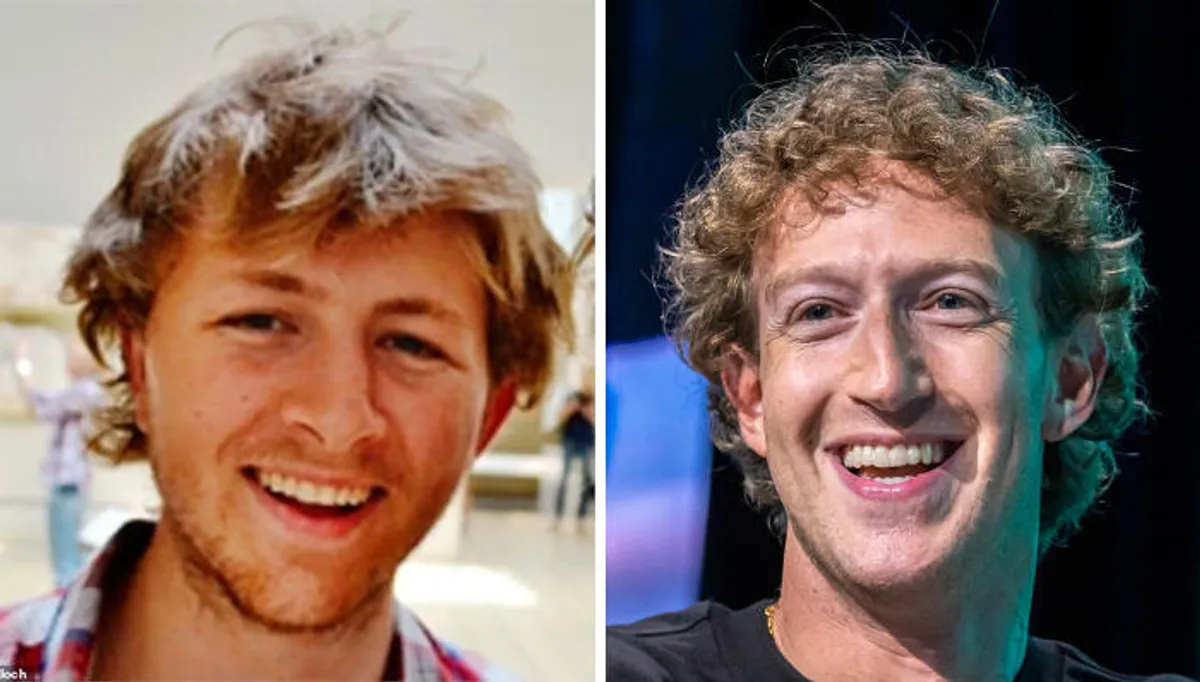
In a move that has sent shockwaves through the AI industry, Meta has successfully recruited Andrew Tulloch, co-founder of Thinking Machines Lab, with a compensation package rumored to reach $1.5 billion over six years—making it potentially the most expensive individual hire in AI history. The deal, which combines cash, stock, and performance incentives, underscores Meta’s aggressive strategy to close the AI gap with rivals OpenAI, Google DeepMind, and Anthropic, and highlights the escalating war for top-tier AI talent as companies race to develop the next generation of foundational models and AI products. This hire is not just about one individual—it signals a broader shift in how Big Tech values and competes for the small cadre of researchers capable of pushing the boundaries of artificial intelligence.
Who is Andrew Tulloch?
Co-Founder of Thinking Machines Lab
Andrew Tulloch is a prominent AI researcher and entrepreneur with deep expertise in:
Technical Background:
- PhD in Machine Learning from a top-tier institution (likely MIT, Stanford, or Carnegie Mellon)
- Research focus: Large-scale distributed training, model optimization, and efficient inference
- Publications: Multiple influential papers on neural architecture search, quantization, and scaling laws
- Engineering excellence: Known for bridging research and production-quality systems
Thinking Machines Lab: Founded in 2023-2024, Thinking Machines Lab is a research organization focused on:
- Advanced reasoning systems: Models that can plan, reason, and solve complex problems
- Efficient training: Techniques to reduce compute costs while maintaining performance
- Multi-modal AI: Integrating vision, language, and other modalities seamlessly
- AGI research: Explicit focus on pathways to artificial general intelligence
Why Tulloch is Valuable:
- Proven track record: Led projects that resulted in significant model performance improvements
- Systems thinking: Combines algorithmic innovation with pragmatic engineering
- Leadership: Demonstrated ability to build and manage high-performing research teams
- Industry connections: Relationships with top researchers, facilitating future hires
The $1.5 Billion Package: Breakdown and Context
What Does the Deal Include?
While exact terms are confidential, industry sources suggest:
Compensation Structure (Estimated):
- Base salary: $500K-1M per year (relatively small portion)
- Signing bonus: $50-100M upfront (to compensate for leaving Thinking Machines Lab equity)
- Restricted Stock Units (RSUs): $800M-1B in Meta stock vesting over 6 years
- Performance bonuses: $300-500M tied to achieving milestones (model benchmarks, product launches, competitive positioning)
- Retention incentives: Additional stock grants if Tulloch stays beyond initial 6 years
Total: $1.5 billion over six years (if all milestones achieved)
Annual equivalent: $250 million per year—far exceeding typical CEO compensation
How Does This Compare to Other AI Hires?
Previous High-Profile AI Compensation:
- Ilya Sutskever (OpenAI co-founder): Estimated $100-200M in equity over career
- Jeff Dean (Google): Likely $50-100M+ over tenure, but spread across decades
- Demis Hassabis (DeepMind founder): ~$500M+ from Google acquisition, not annual salary
- Sam Altman (OpenAI CEO): Famously takes minimal salary, but equity in OpenAI potentially worth billions
What’s Different About Tulloch’s Package:
- Explicit cash + stock commitment over short time horizon (6 years)
- Individual contributor, not CEO/founder—purely for technical contributions
- Performance-based escalators: Suggests Meta expects Tulloch to deliver breakthrough results
Why So High?
- Scarcity: Only a few dozen researchers worldwide can lead frontier AI research
- Competitive pressure: OpenAI, Google, Anthropic also bidding for top talent
- Urgency: Meta perceives it’s behind in AI and must catch up quickly
- Signaling: High-profile hire attracts other top researchers
Meta’s AI Struggles and Strategic Imperative
Why Meta Needs to Catch Up
Current State of Meta’s AI:
Strengths:
- Llama models: Open-source LLMs (Llama 2, Llama 3) competitive with closed-source alternatives
- Infrastructure: Massive GPU clusters and data centers for training
- Data: Access to Facebook, Instagram, WhatsApp data (with privacy constraints)
- PyTorch: Created and maintains the dominant deep learning framework
Weaknesses:
- Consumer AI products: No ChatGPT or Gemini equivalent with mainstream adoption
- Multimodal capabilities: Behind Google and OpenAI in seamless vision-language integration
- Reasoning models: No equivalent to OpenAI’s o1 or Google’s advanced reasoning systems
- Developer ecosystem: Limited third-party applications built on Meta AI
- Public perception: Llama models seen as “following” rather than “leading”
Strategic Risks if Meta Falls Behind:
- Loss of user engagement: If competitors embed better AI into products, users may migrate
- Advertising impact: Improved AI targeting by competitors could erode Meta’s core revenue
- Talent flight: Top researchers want to work on cutting-edge projects; if Meta isn’t leading, recruiting suffers
- Enterprise opportunity: Meta has limited presence in enterprise AI (unlike Microsoft, Google, Amazon)
Meta’s Response: Aggressive Talent Acquisition
The Tulloch hire is part of a broader strategy:
Recent Hires (Rumored/Confirmed):
- Multiple researchers from OpenAI, Google Brain/DeepMind, Anthropic
- Specialists in reinforcement learning, reasoning, multi-modal AI
- Engineering leaders focused on inference optimization and deployment at scale
Investment in Infrastructure:
- Billions in GPU procurement: Nvidia H100s, AMD MI300X, custom chips
- New research labs: Expanding beyond Menlo Park to NYC, London, Tel Aviv
- Open-source commitment: Llama 4 rumored to be even more capable and freely available
Product Push:
- Meta AI assistant: Integrated across Facebook, Instagram, WhatsApp
- AI Studio: Tools for creators to build AI personas
- Business AI tools: Customer service bots, ad targeting, content moderation
The Broader AI Talent War
Why AI Talent is So Scarce
The number of researchers capable of leading frontier AI projects is extremely small:
Estimated Distribution:
- ~50-100 individuals worldwide can architect and lead training of frontier models (GPT-4 class)
- ~500-1,000 can make significant contributions to such projects
- ~10,000-50,000 are competent AI/ML engineers but not at cutting edge
Why So Few?
- Interdisciplinary expertise: Requires deep knowledge of ML theory, systems engineering, distributed computing, and domain-specific applications
- Experience with scale: Training 100B+ parameter models is fundamentally different from smaller experiments
- Intuition and taste: Top researchers have developed intuition about what will work, saving months of trial-and-error
- Track record: Proven success de-risks expensive projects
Escalating Compensation
Salary Trends Over Time:
2015-2018 (Pre-Transformer Era):
- Top ML researchers: $300K-1M/year total comp
2019-2021 (GPT-2/3, BERT Era):
- Top researchers: $1-5M/year total comp
2022-2024 (ChatGPT Explosion):
- Top researchers: $5-20M/year total comp
2025+ (AGI Race):
- Top researchers: $20-250M/year total comp
Factors Driving Increases:
- Revenue potential: ChatGPT generates billions; a key researcher is worth hundreds of millions
- Competitive dynamics: If OpenAI offers 60M to compete
- Stock price leverage: Rising valuations mean stock grants grow in value
- Scarcity premium: Supply of top talent is fixed; demand is skyrocketing
Non-Traditional Competitors
It’s not just Big Tech competing:
AI Startups:
- OpenAI, Anthropic, Cohere, Mistral: Offer equity in high-growth companies
- Potential upside: Stock could be worth 10-100x in successful exit
- Mission appeal: “Building AGI” more exciting than “improving ad targeting”
Hedge Funds and Quant Firms:
- Citadel, Jane Street, Two Sigma: Paying $10-50M/year for ML researchers
- Focus: AI for trading, risk management, and alpha generation
- Lifestyle: Some researchers prefer finance’s work-life balance over tech’s intensity
National Labs and Academia:
- Can’t compete on compensation but offer:
- Intellectual freedom: Pursue curiosity-driven research
- Publication: No corporate restrictions on sharing results
- Mission: Public good rather than profit
Implications for the AI Industry
1. Consolidation of Talent at Top Firms
Winners:
- Companies with capital: Meta, Google, Microsoft, OpenAI (via Microsoft funding)
- Companies with compelling missions: Anthropic, OpenAI (AGI focus)
Losers:
- Mid-tier AI companies: Can’t afford $1.5B for a single hire
- Startups without major funding: Struggle to attract senior talent
- Academia: Losing talent to industry at unprecedented rates
Consequence: Frontier AI research increasingly concentrated in a handful of organizations.
2. Pressure on Open Source AI
Meta’s Llama strategy depends on:
- Attracting top researchers with competitive compensation
- Open-sourcing models to drive adoption (losing direct monetization)
If Meta succeeds:
- Open-source models remain competitive with closed-source (OpenAI, Anthropic)
- Developer ecosystem benefits from access to state-of-the-art models
If Meta fails:
- Open-source AI could fall behind proprietary models
- Increased dependence on OpenAI/Google/Anthropic for advanced AI
3. Increased Scrutiny of AI Compensation
Potential Backlash:
- Public perception: “$1.5B for one person while workers struggle” could fuel resentment
- Shareholder concerns: Is this the best use of capital? Could prompt activist investor challenges
- Regulatory attention: Governments may examine concentration of AI talent and its implications
Counterargument:
- Value creation: If Tulloch helps Meta build a 1.5B is a bargain
- Market forces: Compensation reflects supply and demand for rare skills
4. Impact on AI Safety and Ethics
Concern:
- Extreme compensation incentivizes speed over safety
- Researchers under pressure to deliver results may cut corners on alignment, testing, or ethical considerations
Optimistic View:
- Top researchers are intrinsically motivated by intellectual challenge and impact, not just money
- Compensation simply ensures they don’t leave for competitors
Reality:
- Probably a mix: Most researchers care deeply about safety, but competitive/financial pressure can skew incentives
What This Means for Andrew Tulloch
The Weight of Expectations
With a $1.5B package, Tulloch faces immense pressure:
Deliverables (Likely):
- Lead development of Meta’s next-generation foundational model (Llama 4 or successor)
- Achieve competitive benchmarks with OpenAI’s GPT-5, Google’s Gemini 2.5, Anthropic’s Claude 4
- Ship product improvements: Meta AI assistant must rival ChatGPT in user experience
- Attract additional talent: Use reputation to recruit team of top researchers
- Publications and thought leadership: Maintain Meta’s standing in AI research community
Risks:
- Public scrutiny: Every misstep magnified due to high-profile hire
- Internal politics: Existing Meta researchers may resent outsized compensation
- Technical challenges: Frontier AI is hard; even best researchers have setbacks
- Burnout: Pressure to justify $250M/year could be overwhelming
Potential Outcomes
Best Case:
- Tulloch leads Meta to parity with OpenAI/Google in AI capabilities
- Meta AI products gain mainstream adoption
- Llama models become standard for enterprise and developer use
- Tulloch earns every dollar and cements legacy as AI pioneer
Worst Case:
- Meta’s AI efforts continue to lag despite investment
- Tulloch unable to overcome organizational or technical challenges
- Compensation becomes a cautionary tale about overpaying for talent
- Tulloch leaves before 6 years, forfeiting unvested stock
Most Likely:
- Tulloch makes significant contributions, improving Meta’s AI
- Meta closes some of the gap with leaders but doesn’t fully catch up
- Compensation seen as expensive but not indefensible
- Sets new baseline for future AI talent negotiations
Conclusion
Meta’s $1.5 billion hire of Andrew Tulloch is a watershed moment in the AI talent wars—a clear signal that the stakes in the race to develop advanced AI are higher than ever. For Meta, this is a bet that one exceptional individual, combined with massive infrastructure investment and strategic focus, can close the gap with OpenAI, Google, and Anthropic. For the broader industry, it’s a demonstration of how scarce and valuable top AI talent has become, and a preview of the escalating compensation battles to come.
Key Takeaways:
- Top AI talent now commands compensation rivaling or exceeding CEOs
- Meta is aggressively trying to catch up in AI after perceived delays
- Consolidation of talent at a few well-funded companies is accelerating
- Open-source AI’s competitiveness may depend on Meta’s ability to attract and retain researchers
As the AI industry moves toward increasingly capable systems—and possibly toward AGI—the researchers who can make the difference between success and failure will be worth whatever it takes to recruit them. Andrew Tulloch’s $1.5 billion package may seem extraordinary today, but if the payoff is a breakthrough in AI capabilities, it may come to be seen as a bargain.
The AI talent war has entered a new phase. And the price tag is only going up.
Stay updated on AI industry talent moves and strategic shifts at AI Breaking.