
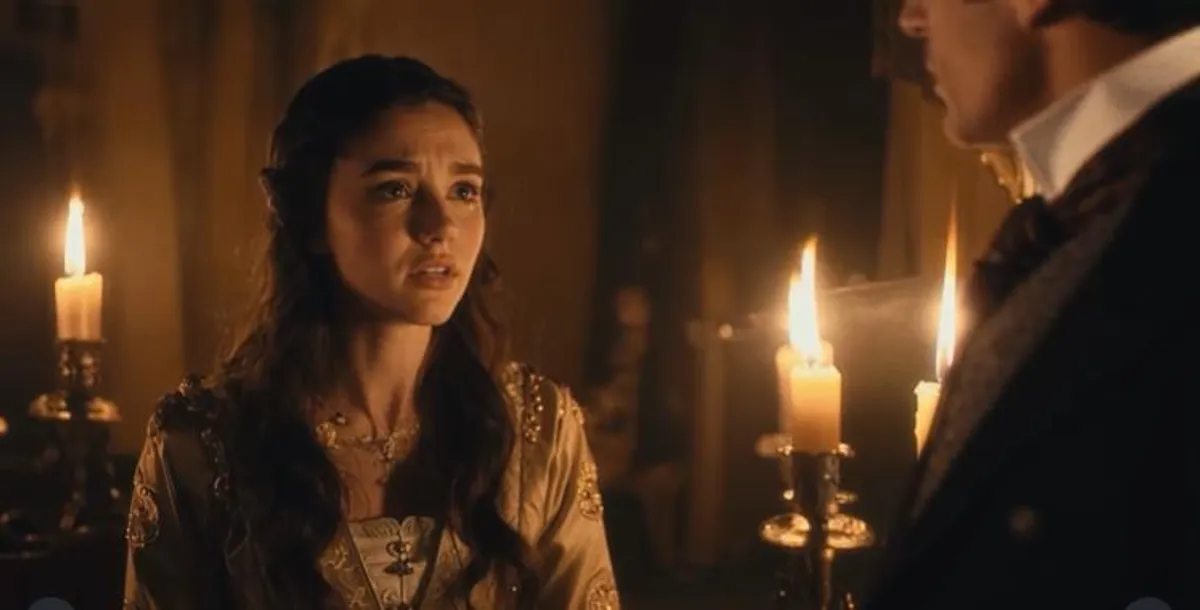
The entertainment industry is facing its most contentious AI controversy yet as Tilly Norwood, an AI-generated “actress” created by comedian and technologist Eline Van der Velden, has sparked fierce outrage after news broke that talent agents are in active negotiations to sign her for representation. The Screen Actors Guild‐American Federation of Television and Radio Artists (SAG-AFTRA) has condemned the move, calling it a “threat to human creativity” and warning of an existential crisis for performers if AI-generated talent becomes commercially viable. This development comes at a critical juncture, just months after Hollywood’s 2023 strikes centered on AI protections—and raises uncomfortable questions about the future of performance, labor, and art in the age of generative AI.
Who (or What) is Tilly Norwood?
The Creation of a Virtual Star
Tilly Norwood is not a person—she’s a fully AI-generated persona with:
Visual Identity:
- Photorealistic appearance: Created using advanced generative models (likely Stable Diffusion, Midjourney, or proprietary tools)
- Consistent features: Every image maintains the same face, hair, and overall look
- Age and style: Appears to be in her mid-20s, fashioned as a modern influencer-actress type
Performance Capabilities:
- Voice synthesis: Custom-trained voice model for dialogue and emotional range
- Motion capture potential: Can be rigged to existing motion capture data for “acting”
- 24/7 availability: No scheduling conflicts, no physical limitations, no aging
Social Media Presence:
- Instagram/TikTok accounts: Posting “behind-the-scenes” content as if she’s a real person
- Brand partnerships: Already attracting sponsorship inquiries
- Fan engagement: Followers who know she’s AI but engage with her persona
The Creator: Eline Van der Velden
Eline Van der Velden is a Dutch comedian and technologist known for provocative projects exploring AI and society. Her stated goals with Tilly Norwood:
Artistic Exploration:
- Satirize influencer culture and the manufactured nature of celebrity
- Demonstrate how easily AI can replicate (and replace) human performers
- Spark debate about authenticity and creativity in entertainment
Commercial Experiment:
- Test whether the market will accept AI-generated performers
- Explore revenue models (sponsorships, licensing, virtual appearances)
- Push boundaries to force industry reckoning with AI’s role
Intentional Provocation: Van der Velden has been explicit that Tilly Norwood is designed to be controversial—forcing Hollywood and audiences to confront uncomfortable truths about what they value in performance.
The Talent Agency Negotiations: What’s at Stake?
Reports of Agent Interest
According to industry sources:
Agencies in Talks:
- Multiple mid-tier talent agencies are reportedly negotiating representation deals
- Focus on commercial work: Ads, social media campaigns, virtual appearances
- Potential film/TV casting: As background characters or even supporting roles in productions willing to experiment
Proposed Revenue Models:
- Licensing fees: Productions pay to use Tilly Norwood’s likeness and “performance”
- Sponsorships: Brand deals for social media content
- Virtual meet-and-greets: Paid interactions with fans via chatbot or video calls
- Merchandising: Products featuring Tilly Norwood’s image
Legal and Ethical Gray Zones:
- Who owns Tilly Norwood? Van der Velden as creator? The agency? A corporate entity?
- Can AI “performers” join unions? SAG-AFTRA explicitly represents human performers
- What about rights of publicity? Traditional frameworks assume human subjects
SAG-AFTRA’s Fierce Response
The Union’s Condemnation
SAG-AFTRA released a statement calling the Tilly Norwood development “deeply troubling” and a “direct threat to the livelihoods of working performers.”
Key Points from the Statement:
- Threat to human creativity: AI-generated performers undermine the art of acting
- Labor displacement: If AI “actors” are commercially viable, real actors lose work
- Exploitation concerns: AI models are often trained on performances of real actors without consent or compensation
- Slippery slope: Today it’s commercials and social media; tomorrow it’s leading roles
Union’s Demands:
- Ban on AI-generated performers in union productions
- Consent and compensation for actors whose likenesses or performances train AI models
- Clear labeling when AI-generated characters are used
- Legislative action to protect performers’ rights of publicity
Context: The 2023 Hollywood Strikes
This controversy comes in the wake of the 2023 SAG-AFTRA and WGA strikes, where AI protections were a central demand:
What Was Won:
- Consent requirements: Studios must get actor permission to create digital replicas
- Compensation: Actors must be paid when their digital likeness is used
- Notification: Productions must disclose when AI is used to alter performances
What Tilly Norwood Represents:
- A loophole: She’s not based on any specific actor, so consent rules don’t apply
- An end-run around labor protections: Why negotiate with actors if you can generate unlimited virtual talent?
- A test case: If Tilly Norwood succeeds commercially, expect dozens of AI actors to follow
The Industry’s Divided Response
Supporters of AI Performers
Tech Optimists and Production Companies:
Arguments in Favor:
- Cost efficiency: AI actors don’t require trailers, per diems, or residuals
- Creative freedom: Directors have total control; no ego, no limitations
- New storytelling: AI enables characters impossible for human actors (e.g., age progression, fantastical creatures)
- Accessibility: Independent filmmakers can afford “A-list” quality performances
Innovation Advocates:
- Expansion of medium: AI actors are tools, not replacements—like CGI before them
- Global reach: AI characters can be localized (voice, cultural nuances) for international audiences
- Immortality of icons: Deceased actors’ estates could license AI versions (controversial but potentially lucrative)
Critics and Defenders of Human Labor
Actors, Writers, and Creative Unions:
Arguments Against:
- Undermines craft: Acting is more than appearance; it’s vulnerability, improvisation, human connection
- Labor exploitation: AI models trained on actors’ work without compensation
- Economic devastation: If background actors, commercial actors, and voice actors are replaced, thousands lose income
- Erosion of art: Entertainment becomes a purely technical exercise, devoid of humanity
Ethical Concerns:
- Consent and autonomy: Real actors whose data trained these models never agreed to create competition
- Deepfake risks: Technology enabling Tilly Norwood also enables nonconsensual deepfakes
- Cultural impact: If AI “people” are normalized in media, what does that do to society’s perception of humanity?
Legal and Regulatory Landscape
Current Protections (Inadequate)
Right of Publicity:
- Protects individuals from unauthorized commercial use of their name, likeness, or persona
- Problem: Tilly Norwood isn’t based on a specific person, so whose rights are violated?
Copyright:
- AI-generated works have ambiguous copyright status in the U.S.
- Problem: Can Tilly Norwood’s “performances” be copyrighted? By whom?
Union Contracts:
- SAG-AFTRA contracts require actors for union productions
- Problem: Non-union productions, commercials, and social media content are outside union jurisdiction
Proposed Legislation
Several jurisdictions are considering regulations:
California (Likely Frontrunner):
- Assembly Bill proposals to extend right of publicity to AI-generated likenesses
- Transparency requirements: Disclose AI-generated content in entertainment
- Consent mandates: Require opt-in from actors whose data trains AI models
Federal (U.S.):
- NO FAKES Act (proposed): Prohibits unauthorized digital replicas of individuals
- AI Labeling Act (proposed): Requires disclosure of AI-generated media
- Copyright Office review: Examining whether AI-generated works deserve copyright
European Union:
- AI Act: Includes provisions for transparency in synthetic media
- GDPR: Could restrict AI training on personal data (including performances)
Public and Industry Reactions
Actors Speak Out
Prominent voices in opposition:
- Mid-level actors: “I’ve spent 20 years honing my craft. Now I’m competing with a computer program?”
- Background actors: “We’re already the most vulnerable. AI ‘extras’ will eliminate thousands of jobs overnight.”
- A-list talent: “Today it’s commercials. Tomorrow they’ll deepfake us into movies without consent.”
Some nuance:
- Stunt performers: “AI could reduce dangerous stunts, but the tech isn’t there yet—and it’s still job loss.”
- Voice actors: “Video game characters are already AI-voiced. We saw this coming.”
Public Sentiment
Audience reactions are mixed:
Skepticism:
- “I watch movies for human performances. AI can’t replicate that.”
- “This is dystopian. Entertainment should celebrate humanity, not replace it.”
Curiosity:
- “If the performance is good, does it matter if it’s AI?”
- “I’d watch a movie with Tilly Norwood out of curiosity.”
Economic pragmatism:
- “Hollywood is a business. If AI is cheaper and audiences don’t care, it’ll happen.”
What Happens Next?
Short-Term (2025-2026)
Commercial testing:
- Tilly Norwood likely to appear in low-stakes projects: Social media ads, indie films, virtual events
- Metrics to watch: Audience engagement, brand partnerships, casting in productions
Legal battles:
- SAG-AFTRA may file cease-and-desist or lobby for injunctions
- Test cases on copyright, right of publicity, and union jurisdiction
Industry responses:
- Major studios likely to avoid controversy initially
- Independent and digital-first productions more willing to experiment
Long-Term (2027-2030+)
Regulatory outcomes:
- Legislation likely to clarify consent, compensation, and disclosure requirements
- Possible ban or severe restrictions on AI performers in certain contexts
- International inconsistency: Some jurisdictions embrace AI actors, others ban them
Technological evolution:
- AI performance quality improves dramatically
- Real-time interactive AI actors: Characters that respond uniquely to each viewer
- Hybrid models: Human actors’ performances enhanced/modified by AI in post-production
Labor market impacts:
- Decline in demand for background actors, commercial actors, voice talent
- Premium on A-list human stars as a mark of authenticity and prestige
- New roles emerge: AI performance directors, synthetic actor supervisors
The Deeper Question: What is Acting?
Philosophical Implications
The Tilly Norwood controversy forces us to confront fundamental questions:
Is acting primarily technical?
- If an AI can replicate the movements, expressions, and vocal patterns of a great performance, is it acting?
Is acting about humanity?
- Or is acting the unique vulnerability and spontaneity of human expression—something irreducible to algorithms?
What do audiences value?
- Performance quality (in which case AI may suffice)
- Human connection (in which case AI falls short)
- Celebrity/persona (in which case it depends on marketing)
Cultural Consequences
If AI actors become normalized:
Positive possibilities:
- Democratized filmmaking: Anyone can tell stories without expensive casts
- Representation: AI actors can be designed to reflect diverse backgrounds without tokenism debates
- Preservation: Deceased actors’ legacies continue through approved AI performances
Negative possibilities:
- Hollowing out of profession: Acting becomes a niche art form, not a viable career
- Loss of authenticity: Entertainment becomes indistinguishable from algorithmic content
- Deepfake dystopia: Societal inability to distinguish real people from synthetic ones
Conclusion
The Tilly Norwood controversy is not just about one AI-generated actress—it’s a harbinger of a transformation in entertainment, labor, and creativity that’s already underway. While SAG-AFTRA’s outrage is justified from a labor perspective, and while ethical concerns about consent and displacement are real, the genie is out of the bottle.
The questions we must answer:
- How do we protect performers’ livelihoods while allowing technological experimentation?
- What regulatory frameworks can balance innovation with worker rights?
- What do we, as audiences, truly value in performance—and are we willing to pay the premium for human artistry?
As talent agencies negotiate deals for a being who doesn’t exist, and as unions mobilize to protect their members from obsolescence, one thing is clear: The entertainment industry’s reckoning with AI has only just begun. Tilly Norwood may be the first, but she won’t be the last—and how Hollywood, regulators, and audiences respond will shape the future of performance itself.
The stage is set. The lights are up. And the actor taking the spotlight isn’t human.
Stay updated on AI in entertainment and creative industries at AI Breaking.