
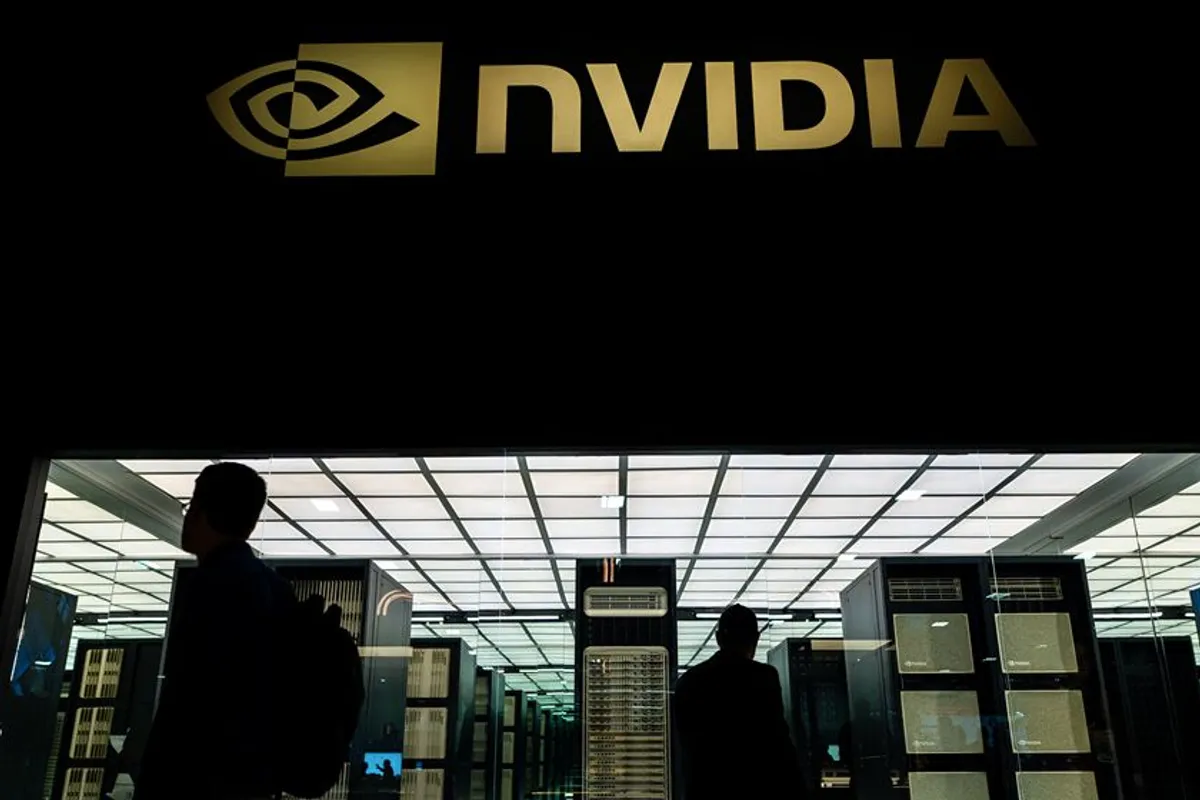
On October 29, 2025, NVIDIA became the first company in history to reach a 4 trillion company, NVIDIA’s ascent continues to defy gravity, driven by CEO Jensen Huang’s announcements of 400 billion in market cap across just two trading days in late October. NVIDIA is now worth more than the GDP of every country on Earth except the United States and China, cementing its position as the most valuable company ever created—and the undisputed king of the AI era.
The $5 Trillion Milestone: A Historic Achievement
The Fastest Climb in Market Cap History
NVIDIA’s Valuation Milestones:
- June 2023: $1 trillion (first time)
- February 2024: 1T)
- June 2024: 2T)
- July 2025: 3T)
- October 2025: 4T)
The 5T jump took just 3 months—the fastest trillion-dollar gain in corporate history.
For Context:
- Apple reached 4 trillion** (as of October 2025)
- Microsoft peaked at ~3.2 trillion
- Saudi Aramco briefly touched 2 trillion
- Google (Alphabet) sits at ~$2.1 trillion
- Amazon at ~$1.9 trillion
NVIDIA is now worth more than:
- Apple + Amazon combined ($3.7 trillion)
- Microsoft + Google combined ($5.3 trillion, roughly equal)
- The entire GDP of Japan ($4.2 trillion)
- The entire GDP of Germany ($4.5 trillion)
Stock Performance: A 2025 Masterclass
NVIDIA’s 2025 Stock Surge:
- January 1, 2025: ~$140 per share (split-adjusted)
- October 29, 2025: ~$210 per share
- YTD gain: +50% in 10 months
Recent Acceleration:
- October 27-28, 2025: Stock surged +6.5% in two days
- Market cap added: Over $400 billion in 48 hours
- Driver: Jensen Huang’s announcement of $500B in Blackwell GPU orders and U.S. government supercomputer contracts
Comparison to Competitors (2025 YTD):
- NVIDIA: +50%
- AMD: +18%
- Intel: -22% (struggling with AI transition)
- S&P 500: +12%
- Nasdaq: +15%
NVIDIA outperformed the S&P 500 by 4.2x and AMD by 2.8x in 2025 alone.
The Blackwell Effect: $500 Billion in AI Chip Orders
Jensen Huang’s Bombshell Announcements
At NVIDIA’s late-October 2025 event, CEO Jensen Huang revealed:
1. $500 Billion in Blackwell GPU Orders:
- Orders for NVIDIA’s next-generation Blackwell GPUs now total $500 billion
- Customers: Hyperscalers (Microsoft, Google, Amazon, Meta), AI startups (OpenAI, Anthropic, xAI), enterprises
- Delivery timeline: 2025-2027
2. U.S. Government Supercomputer Contracts:
- NVIDIA will build multiple exascale supercomputers for U.S. government agencies (Department of Energy, Department of Defense)
- Use cases: AI for national security, nuclear simulations, climate modeling, bioweapon defense
- Value: Undisclosed, but likely tens of billions over multi-year contracts
3. Half a Trillion in Annual Revenue (Projected):
- Jensen Huang stated NVIDIA is “on track for half a trillion dollars in revenue” (estimated 2027-2028)
- Current revenue (FY2025): ~$130 billion (estimated)
- Projected growth: ~3.8x in 3 years
What Is Blackwell?
Blackwell is NVIDIA’s next-generation GPU architecture, succeeding the current Hopper H100/H200 GPUs that dominate AI training and inference.
Key Specs:
- Performance: 2-5x faster than Hopper H100 for large language model (LLM) training
- Architecture: Multi-chip design (two GPU dies connected via NVLink-C2C), enabling up to 208 billion transistors (vs. 80 billion in H100)
- Memory: 192 GB HBM3e (high-bandwidth memory) per GPU (vs. 80 GB in H100)
- Power efficiency: 25-30% better energy efficiency than Hopper
- FP8 precision: Optimized for AI workloads (matrix multiplication, transformer attention)
Blackwell Product Line:
- B100: Standard data center GPU
- B200: Higher performance variant
- GB200: Grace-Blackwell “superchip” (combines Blackwell GPU with NVIDIA’s Grace CPU for unified memory architecture)
- DGX GB200: Complete AI system (8x GB200 in a single rack, delivering 180 petaflops of AI compute)
Why $500 Billion in Orders?
Training frontier AI models (GPT-5, Gemini 2.5, Claude Opus 4) requires tens of thousands of GPUs:
- GPT-5 training (estimated): 25,000-50,000 H100 GPUs, cost ~1 billion
- Gemini 2.5 training: Similar scale
- Meta’s Llama 4: Meta ordered 100,000+ GB200 GPUs for 2026 training runs
At 50,000 per Blackwell GPU, orders from just 10-20 major customers can hit $500 billion:
- Microsoft: $100 billion+ (Azure AI infrastructure)
- Google: $80 billion+ (Gemini training, Google Cloud)
- Meta: $60 billion+ (Llama models, ads AI)
- Amazon: $50 billion+ (AWS AI instances, Alexa upgrades)
- OpenAI: $30 billion+ (GPT-6, GPT-7 pre-orders)
- xAI (Elon Musk): $20 billion+ (Grok models, Colossus supercomputer expansion)
- Anthropic, ByteDance, Alibaba, Tesla, others: $160 billion+ combined
The AI Chip Monopoly: NVIDIA’s Unassailable Moat
90%+ Market Share for AI Training
NVIDIA’s Dominance by Workload:
- AI model training (LLMs, vision models): ~92% market share (primarily H100, H200, upcoming Blackwell)
- AI inference: ~70% market share (competing with Google TPUs, AWS Inferentia, AMD MI300)
- High-performance computing (HPC): ~85% market share (scientific simulations, supercomputers)
Why NVIDIA Is Unbeatable (So Far):
1. CUDA Software Ecosystem:
- CUDA (Compute Unified Device Architecture) is NVIDIA’s proprietary programming model for GPUs
- Launched in 2006, CUDA has 19 years of ecosystem maturity
- Millions of developers trained in CUDA, making switching costs prohibitively high
- AI frameworks (PyTorch, TensorFlow, JAX) are optimized for CUDA first, others second
2. Hardware-Software Co-Design:
- NVIDIA’s GPUs are purpose-built for AI matrix math (tensor cores, FP8 precision)
- NVLink interconnects enable ultra-fast multi-GPU scaling (essential for training LLMs across thousands of GPUs)
- Grace CPU + Blackwell GPU integration (GB200) creates unified memory architecture, reducing bottlenecks
3. First-Mover Advantage:
- NVIDIA bet on AI in 2012 (AlexNet ImageNet breakthrough)
- Competitors (AMD, Intel) focused on traditional datacenter CPUs until 2020-2022—too late to catch up
- Supply chain locked in: NVIDIA secured TSMC’s cutting-edge 4nm/3nm manufacturing capacity years in advance
4. Network Effects:
- Developers build on CUDA → More CUDA tools/libraries → More developers choose NVIDIA → Competitors fall further behind
- Cloud providers (AWS, Azure, Google Cloud) offer NVIDIA GPUs as standard—AMD/Intel are “alternatives”
Competitors Struggling to Catch Up
AMD:
- MI300X GPUs launched in late 2024, targeting AI inference
- Market share: ~5-7% for AI training, ~15% for inference
- Challenge: CUDA ecosystem lock-in, NVIDIA’s NVLink advantage
Intel:
- Gaudi 3 AI accelerators launched Q1 2025
- Market share: ~3-5% for AI training
- Crisis: CEO Pat Gelsinger departed in December 2024, strategy unclear
Google TPUs:
- Ironwood (7th-gen TPUs) launched November 2025, 4x faster than previous gen
- Market share: ~10-12% for AI inference, primarily Google Cloud customers
- Limitation: Only available on Google Cloud, requires TensorFlow/JAX (not PyTorch-native)
AWS Trainium/Inferentia:
- Custom chips for AI training (Trainium) and inference (Inferentia)
- Market share: ~5% for AI training (mostly Amazon’s own models)
- Limitation: AWS-exclusive, less mature ecosystem than CUDA
NVIDIA’s response: Blackwell GPUs widen the performance gap, making it even harder for competitors to justify switching costs.
Jensen Huang: The Architect of NVIDIA’s AI Empire
From Near-Bankruptcy to $5 Trillion
NVIDIA’s Origin Story:
- Founded: 1993 by Jensen Huang, Chris Malachowsky, Curtis Priem
- Mission: Build GPUs for PC gaming (3D graphics acceleration)
- Near-death experience (1995-1996): NVIDIA nearly went bankrupt after early chip failures
- IPO: 1999, raised 12/share (split-adjusted: ~$0.05/share)
The Pivot to AI:
- 2006: NVIDIA launches CUDA, enabling GPUs for general-purpose computing (beyond graphics)
- 2012: AlexNet wins ImageNet competition using NVIDIA GPUs—AI researchers flock to CUDA
- 2016: NVIDIA launches DGX-1, the first AI-specific supercomputer ($129,000)
- 2017: Google announces TPUs—NVIDIA faces first real AI chip competitor
- 2020: OpenAI trains GPT-3 on 10,000 NVIDIA V100 GPUs—AI becomes NVIDIA’s core business
- 2023: ChatGPT explodes, triggering insatiable demand for H100 GPUs
Jensen Huang’s Vision:
Huang recognized as early as 2012 that AI would be the next computing platform—while competitors (Intel, AMD) still focused on CPUs for servers and PCs. This 10-year head start is now insurmountable.
Key Quotes:
- “The iPhone moment for AI is here” (November 2022, after ChatGPT launch)
- “We’re on track for half a trillion dollars in revenue” (October 2025)
- “NVIDIA is not a chip company—we’re a platform company” (recurring theme)
The Leather Jacket CEO
Jensen Huang’s signature black leather jacket has become iconic:
- Wears it at every keynote (NVIDIA GTC, earnings calls, tech conferences)
- Symbol of consistency: Unlike other CEOs who change styles, Huang’s look is instantly recognizable
- Memes: Tech Twitter jokes that Jensen’s jacket is “worth more than most companies’ market caps”
Leadership Style:
- Technical depth: Huang personally reviews GPU architectures, rare for a CEO of a $5T company
- Customer-obsessed: Huang regularly visits AI labs (OpenAI, Google DeepMind, Meta FAIR) to understand needs
- Long-term bets: Invested in CUDA for 6 years before it paid off, resisted short-term profit pressure
The Broader Impact: NVIDIA’s $5T Changes Everything
Rewriting Tech’s Power Rankings
New Market Cap Hierarchy (October 2025):
- NVIDIA: $5.0 trillion
- Apple: $3.4 trillion
- Microsoft: $3.2 trillion
- Google (Alphabet): $2.1 trillion
- Amazon: $1.9 trillion
- Saudi Aramco: $2.0 trillion
- Meta: $1.5 trillion
- Tesla: $1.2 trillion
- Berkshire Hathaway: $1.0 trillion
- TSMC: $0.9 trillion
NVIDIA is now worth:
- 1.5x Apple (the previous most valuable company, 2011-2023)
- 1.6x Microsoft (previous most valuable, 2024-2025)
- 2.6x the entire U.S. banking sector (JPMorgan, Bank of America, Wells Fargo, Citi combined)
The AI Infrastructure Arms Race
NVIDIA’s $5T valuation reflects the unprecedented capital flowing into AI infrastructure:
2025 AI Infrastructure Spending (Estimates):
- Microsoft: $80 billion (Azure AI, OpenAI partnership)
- Meta: $60-65 billion (Llama models, ads AI)
- Google: $50 billion (Gemini, TPUs, Google Cloud)
- Amazon: $50 billion (AWS AI, Trainium/Inferentia)
- OpenAI: $10-15 billion (GPT-6 training, inference clusters)
- xAI: $10 billion (Colossus supercomputer expansion)
- Anthropic: $5-10 billion (Claude scaling, Google TPUs)
- Others (ByteDance, Alibaba, Tesla, enterprises): $50+ billion
Total: $300-400 billion in 2025 alone—nearly all flowing to NVIDIA, TSMC (chip manufacturing), and datacenter infrastructure providers.
Power as the New Bottleneck
NVIDIA’s growth is now limited by electricity, not chip production:
Energy Requirements for AI:
- A single H100 GPU: 700 watts (0.7 kW)
- A 10,000-GPU cluster (small by 2025 standards): 7 megawatts
- A 100,000-GPU cluster (OpenAI, Meta scale): 70 megawatts (equivalent to a small city)
- NVIDIA’s Blackwell GB200 DGX: 120 kilowatts per rack (requiring liquid cooling)
The Power Challenge:
- Nuclear restarts: Microsoft restarted Three Mile Island to power AI data centers
- On-site generation: Meta, Google building on-site solar/wind farms
- Small modular reactors (SMRs): Amazon, Microsoft investing in next-gen nuclear for AI
- Grid constraints: Some U.S. regions can’t provide enough power for new datacenter projects
NVIDIA’s response: Blackwell GPUs are 25-30% more energy-efficient, but total power consumption still rises due to scale.
What Comes Next? Can NVIDIA Hit $10 Trillion?
The Bull Case
Optimists argue NVIDIA could reach $10 trillion by 2028-2030:
- AI is in early innings: Only ~15-20% of enterprise workloads use AI today—massive runway for growth
- Inference will dwarf training: As AI models mature, inference costs will be 10-100x training costs—NVIDIA captures both
- Robotics, autonomous vehicles: NVIDIA’s Jetson chips power humanoid robots (Tesla Optimus, Figure AI)—new $trillion+ market
- Sovereign AI: Countries building national AI infrastructure (UAE, Saudi Arabia, India, Japan)—multi-hundred-billion opportunity
Revenue Projections:
- 2025: ~$130 billion
- 2027: ~$250-300 billion (Jensen’s “half a trillion” target is 2028+)
- 2030: ~$500-700 billion (if AI adoption continues)
At 20-25x price-to-earnings (P/E) ratio, 10-12 trillion market cap**.
The Bear Case
Skeptics warn of risks:
- Competition catching up: Google TPUs, AMD MI400, custom chips (Apple, Tesla) could erode market share
- Commoditization: As AI models mature, chip margins compress (like what happened to Intel in PCs)
- Regulatory risk: U.S. government may restrict AI chip exports to China, cutting ~10-15% of revenue
- Macro slowdown: Recession could force hyperscalers to cut AI spending
- Bubble concerns: Some analysts argue NVIDIA’s 50x P/E ratio is unsustainable—regression to 20x P/E would cut valuation in half
Historical Precedent:
- Cisco (2000): Hit $555 billion market cap during dot-com bubble, then crashed 80%
- Intel (2000): Peaked at $500 billion, never recovered
- NVIDIA itself (2021-2022): Fell from 1 trillion during crypto crash, then rebounded
Conclusion: The AI Era Belongs to NVIDIA (For Now)
NVIDIA’s 500 billion in Blackwell GPU orders, U.S. government supercomputer contracts, and a path to $500 billion annual revenue, NVIDIA’s dominance appears secure through 2027-2028.
Key takeaways:
- Fastest trillion-dollar climb ever: 5T in just 3 months
- 90%+ market share in AI training chips, 70% in inference
- CUDA ecosystem creates insurmountable switching costs for competitors
- Blackwell GPUs widen performance gap, making competition even harder
- Power, not chips, is the bottleneck—nuclear restarts, SMRs becoming necessary
The risks are real: Competition from Google, AMD, custom chips; potential recession; bubble warnings. But for now, every AI breakthrough—GPT-6, Gemini 3, Llama 5—requires thousands of NVIDIA GPUs. As long as that’s true, NVIDIA’s growth continues.
Jensen Huang’s leather jacket has become the symbol of the AI era—and behind it, a $5 trillion empire that’s reshaping not just tech, but the global economy. The question isn’t whether NVIDIA will stay dominant in 2026—it’s whether anyone can build a competitive alternative before AI matures into a commodity.
For now, the answer is clear: In the AI era, NVIDIA is the only game in town. And $5 trillion is just the beginning.